
WELCOME BONUS 300%
UP TO €2000 + 100
FREE SPINS
UP TO €2000 + 100
FREE SPINS
Home → Blackjack
Blackjack at Royal Online: Variants, Rules and Payouts
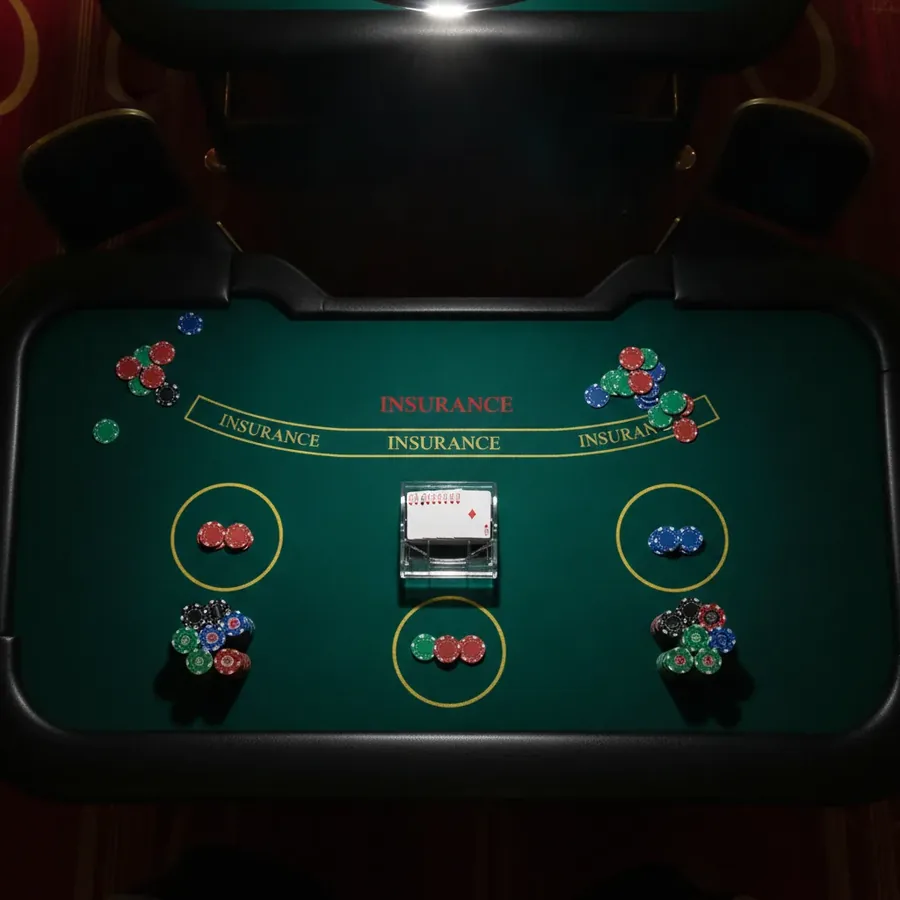
Blackjack Party runs with two hosts
The Blackjack Party live dealer game is hosted by two presenters. This entertainment-focused variant allows for bets ranging from 1.00 EUR up to 1,000 EUR. Players seeking a more engaging atmosphere will find this option appealing.
This particular live dealer blackjack variant aims to replicate a party atmosphere. While specific RTP figures for this version are not detailed, other live blackjack options like Quantum Blackjack Plus Live offer an RTP of 99.57% with optimal strategy. The house edge is a key factor in long-term play.
The inclusion of two hosts differentiates Blackjack Party from standard live dealer blackjack offerings. Players should note that the game contribution to bonus wagering is typically 10% for table games. This means that a significant amount of turnover is required to meet bonus conditions.
Which hands are excluded from Surrender?
The Blackjack Surrender option, where a player can forfeit half their bet after the dealer checks for blackjack, is a rule that can modify the RTP. This specific rule, when applied, offers a house edge reduction of approximately 0.08 percentage points. The player's decision to surrender is made after the dealer's blackjack check.
Early Surrender is a far more advantageous rule for the player, potentially reducing the house edge by up to 0.60 percentage points, but it is described as extremely rare. The standard Blackjack Surrender, as provided, allows a player to give up their hand and lose half their stake. This is distinct from other blackjack variants.
The consequence for a player utilizing the Surrender option is the loss of 50% of their original bet. This mechanic is designed to mitigate losses in unfavorable situations, particularly when the dealer shows a strong upcard. Players should be aware that this option is not available in all blackjack games.
What doesn't count as Blackjack after Split?
In certain blackjack scenarios involving splits, a hand that totals 21 might not be considered a natural Blackjack. This is particularly relevant when a player splits Aces and then receives a 10-value card on one of the Aces. Such a hand, though totalling 21, is typically paid out at even money (1:1) rather than the standard 3:2 Blackjack payout.
The rules surrounding splits and resulting hands can significantly impact the house edge. For instance, the rule allowing Double After Split (DAS) offers a benefit of approximately 0.14 percentage points towards the player's RTP. Conversely, a dealer standing on Soft 17 (S17) improves the RTP by 0.22 percentage points compared to hitting.
Players must understand these nuances to optimize their strategy. A Blackjack pays 3:2, meaning a 10 EUR bet yields 25 EUR profit. However, a 21 achieved after a split might only pay 1:1, resulting in a 10 EUR profit on a 10 EUR bet. This distinction is crucial for managing expectations.
Which table limits suit 20 EUR balance?
For a player with a 20 EUR balance, table limits are a critical consideration for longevity in live dealer games. The Blackjack Party variant, for example, has a betting range from 1.00 EUR to 1,000 EUR. This allows players with smaller balances to participate in multiple rounds.
Infinite Blackjack, another live option, permits bets from 1 EUR up to 5,000 EUR and offers unlimited player positions. This generous betting range makes it accessible for players with a 20 EUR balance to enjoy the game without immediate risk of exceeding their bankroll on a single bet, assuming they bet conservatively.
Quantum Blackjack Plus Live has a minimum bet of 1 EUR and a maximum of 5,000 EUR, also accommodating smaller balances. It is important to note that table game contributions to bonus wagering are often 10%, meaning a 20 EUR bonus would require 200 EUR in table game bets to clear. Players should choose tables that align with their intended betting strategy.
Bonus conditions often exclude Blackjack completely
The welcome bonus of 300% up to €2,000 plus 100 free spins comes with specific wagering requirements that often impact blackjack play. Typically, table games like blackjack contribute only 10% towards the wagering requirement. This means that for every 10 EUR wagered on blackjack, only 1 EUR counts towards clearing the bonus.
The bonus conditions explicitly state that table games contribute 10% to bonus turnover, while slots contribute 100%. To illustrate, clearing a bonus that requires 40 times the bonus amount would necessitate significantly more wagers on blackjack compared to slots. For example, a €100 bonus with a 40x wagering requirement (4,000 EUR total turnover) would require €40,000 in blackjack bets if it counted at 10%.
A significant consequence for players favouring blackjack is that some bonus terms may even exclude blackjack entirely from contributing to wagering requirements. This means that any bets placed on blackjack would not count towards meeting the conditions necessary to withdraw bonus funds or winnings derived from them. Players must carefully review the specific terms and conditions associated with any bonus offer.
Blackjack variants at a glance
| Variant | Payout | House edge | Rule | Bet range |
|---|---|---|---|---|
| Blackjack Surrender (Late Surrender) – Regel-Effekt | n.a. (Regel-Modifikator) | −0.08 Prozentpunkte | Spieler gibt Hand nach Dealer-Blackjack-Prüfung auf, verliert die Hälfte des Einsatzes. Verbessert RTP um ca. 0.08 Prozentpunkte. Early Surrender ist wesentlich wertvoller (bis −0.6 Prozentpunkte), aber extrem selten. | Rückzahlung 50% des Einsatzes |
| Blackjack Insurance / Versicherung (6–8 Decks) | 92.53% | 7.47% | Separate Nebenwette bis 50% der Hauptwette, wenn der Dealer ein Ass hat. Basisstrategie schreibt IMMER Ablehnung vor (außer Karten zählen bei True Count ≥ +3). Bei einem Deck Vorteil ≈ 5.88% | Insurance 2:1 |
| Blackjack Split / Double / H17 – Regel-Effekte | n.a. (Regel-Modifikatoren) | H17 +0.22 Prozentpunkte; RSA −0.08 Prozentpunkte; DAS −0.14 Prozentpunkte | Dealer Hits Soft 17 verschlechtert RTP um 0.22 Prozentpunkte; Resplit Aces verbessert um 0.08 Prozentpunkte; Double After Split verbessert um ca. 0.14 Prozentpunkte; 6 Decks statt 8 – ca. 0.02 Prozentpunkte. | Double – Einsatz ×2 mit einer Karte; Split – bis 4 Hände; Ass-Split meist mit einer Karte. |
| Blackjack 6 Decks, S17, DAS, DOA, Auszahlung 3:2, Basisstrategie | 99.54% | 0.46% | Dealer steht auf Soft 17; Verdopplung auf jeder Zweierkarte; Verdopplung nach Split erlaubt; keine Aufgabe. Basisstrategie ist für diesen Wert zwingend | Blackjack 3:2, normaler Gewinn 1:1, Insurance 2:1 |
| Blackjack Liberal Vegas Strip (liberale Regeln, 3:2) | 99.72% | 0.28% | Günstigste Regelkombination: S17 + DAS + Resplit + Late Surrender. Standardabweichung 1,15 | Blackjack 3:2, Gewinn 1:1 |
| Blackjack Ein Deck, klassische Regeln, 3:2 | 99.85% | 0.15% | Weniger Decks = niedrigerer Vorteil; ein Deck gibt ca. −0.48 Prozentpunkte gegenüber 8 Decks. Oft durch 6:5 Auszahlung kompensiert. | Blackjack 3:2, Gewinn 1:1 |
Chose Wrong Table for 5 EUR Bankroll
For a bankroll of 5 EUR, tables with higher minimum stakes like Quantum Blackjack Plus Live, which accepts bets from 1 EUR up to 5,000 EUR, would not be suitable. This minimum bet is significantly higher than the total player funds. Players should seek tables with lower entry points to manage their limited capital effectively. Even a modest bankroll requires careful table selection to avoid rapid depletion.
Consider the implications of a 5 EUR bankroll against a minimum bet of 1 EUR, as seen in Quantum Blackjack Plus Live. This means only five bets are possible before the bankroll is exhausted, assuming no wins. Such a low number of potential wagers severely limits playing time and any chance of strategic play. It is advisable to find tables that permit bets lower than 1 EUR if available for such small bankrolls.
The consequence of selecting a table with an inappropriate minimum bet for a 5 EUR bankroll is immediate and detrimental. A single bet could represent 20% of the total funds, making a short losing streak financially disastrous. To enjoy the live dealer experience, players with small bankrolls must prioritize tables offering stakes of 0.50 EUR or less, if such options exist.
Double Down vs Simple Hit on 11
In Blackjack 6 Decks, which has a standard RTP of 99.54% and a house edge of 0.46%, doubling down on a hand totalling 11 is a fundamental strategy. This action allows a player to double their original bet in exchange for receiving exactly one more card. Doubling down on 11 is advantageous because it offers a strong chance of achieving a high total, often 18 to 21.
When faced with an 11, a simple hit means taking another card without increasing the stake, whereas doubling down doubles the bet. The Blackjack Liberal Vegas Strip variant, with an RTP of 99.72%, explicitly includes Double After Split (DAS) rules, enhancing player options. Doubling down on 11 is statistically favourable as it capitalises on the highest probability of forming a strong hand.
The strategic decision between hitting and doubling down on 11 directly impacts the overall RTP and house edge. By opting to double down when statistically indicated, players aim to maximise potential winnings on favourable hands. This strategy is crucial for players aiming to achieve the theoretical RTP of games like Blackjack 6 Decks, moving closer to the optimal 0.46% house advantage.
Infinite Blackjack uses the Six Card Charlie
Infinite Blackjack, offered by Evolution with an RTP of 99.47%, does not explicitly list the Six Card Charlie rule as a standard feature. This rule typically awards an automatic win if a player achieves a hand of six cards without busting, regardless of the dealer's hand. While not a core part of Infinite Blackjack's base game, its absence means players must rely on standard winning conditions.
The side bets available in Infinite Blackjack, such as Any Pair, 21+3, Hot 3, and Bust It, offer alternative ways to win, but none are equivalent to a Six Card Charlie payout. The game's appeal lies in its unlimited seating and the standard blackjack rules, aiming for a 99.47% RTP. Players should focus on these established mechanics rather than assume the presence of less common rules.
Without the Six Card Charlie rule, players in Infinite Blackjack must achieve a winning hand through standard means: beating the dealer's hand or having the dealer bust. The game's generous RTP of 99.47% is derived from its primary blackjack gameplay and side bet payouts. Understanding these core mechanics is essential for players engaging with this Evolution offering.
What Push Means: Stake Returns to You
In blackjack variants like Blackjack 6 Decks, a 'push' occurs when the player's hand total is equal to the dealer's hand total, and neither has busted. For example, if both the player and the dealer end up with a total of 17, the hand is a push. This outcome is distinct from a win or a loss for the player.
When a push occurs, the stake placed on that hand is returned to the player. This means the player neither wins nor loses money on that particular round, effectively negating the bet. This is a neutral outcome, maintaining the player's bankroll for subsequent hands, as seen in games with a 3:2 payout structure.
The concept of a push is integral to blackjack strategy and house edge calculations. In Blackjack 6 Decks, with a house edge of 0.46%, pushes contribute to maintaining this advantage over the long term. It ensures that neither the player nor the casino gains an immediate financial advantage solely from a tied score.
What Peek Means with a Dealer Ace
The 'peek' rule, often associated with dealer Ace checks, is a proactive measure in some blackjack games to immediately determine if the dealer has blackjack. This is particularly relevant in games like Blackjack Insurance / Versicherung (6–8 Decks), which offers a side bet when the dealer shows an Ace. A peek allows the dealer to check their hole card for blackjack before players make further decisions.
When a dealer shows an Ace, the peek procedure allows the dealer to quickly check their face-down card. If it is a 10-value card, resulting in a blackjack, the hand is immediately resolved. This prevents players from losing additional bets, such as doubling down or splitting, on a hand that would have been a losing one anyway. The RTP for Blackjack Insurance is 92.53%, with a significant house advantage of 7.47%.
In the context of Blackjack Insurance / Versicherung, the peek rule is crucial for side bet decisions. If the dealer does not have blackjack after the peek, the insurance side bet loses, and play continues normally. This process aims to protect players from substantial losses against a dealer's blackjack, though the insurance bet itself has a high house edge.
Insurance vs Even Money on Own Blackjack
Insurance is a side bet offered when the dealer's upcard is an Ace, with a payout of 2:1. For a 6-8 deck game, the house edge on this bet is 7.47%, significantly higher than the main game's edge. This typically translates to a return of 92.53% for players who consistently take insurance, a figure that falls below optimal blackjack RTP.
Even Money, a specific payout for a player's blackjack when the dealer shows an Ace and the player also has blackjack, offers a 1:1 payout. While this might seem less appealing than the standard 3:2 payout on a blackjack, it avoids the risk associated with the Insurance side bet. The decision between Even Money and taking Insurance is a crucial one for players aiming to minimise the house advantage.
The optimal strategy for card counters dictates avoiding Insurance unless the True Count is +3 or higher, as this is the only scenario where the side bet's RTP theoretically improves. For most players, accepting Even Money when dealt a blackjack against a dealer's Ace is the mathematically sound decision to maintain a higher overall RTP.
Splitting tens costs expected value: better stand
Splitting a pair of tens, such as two 10s or face cards, is a common player instinct but often detrimental to expected value. The game rules permit splitting up to four hands in some variants. However, the decision to split tens does not improve the RTP compared to standing on a hard 20.
Standing on a hand totalling 20 against any dealer upcard is generally the superior strategic choice. While splitting tens might yield two potentially strong hands, the probability of improving both to a score greater than 20 is lower than the probability of the dealer having a weaker hand. This is especially true when considering a deck composition.
The benefit of a strong starting hand like 20 outweighs the potential, albeit often realised, outcome of two weaker hands derived from a split. Therefore, a player aiming to maximise their return should always stand on a hand of 20, even if it comprises two ten-value cards. This approach maintains the game's optimal RTP.
Register Late Surrender correctly in three steps
Late Surrender is a rule that allows a player to forfeit half their bet after the dealer checks for blackjack. This option provides a strategic way to mitigate losses in unfavourable situations. The RTP can be improved by approximately 0.08 percentage points when Late Surrender is available and used correctly.
To register Late Surrender correctly, a player must first assess their hand and the dealer's upcard. If the situation is statistically disadvantageous, the player then declares 'Surrender' before taking any further action on their hand. This decision must be made after the dealer has completed their initial check for blackjack.
The consequence of correctly utilising Late Surrender is a reduction in the house edge, thereby increasing the player's overall RTP. This is particularly valuable when facing strong dealer upcards and holding weak player hands, as it prevents a complete loss of the initial wager. Early Surrender, though more beneficial, is rarely offered.
Infinite Blackjack vs Classic Seven-Seat Table
Infinite Blackjack, offered by Evolution, provides an unlimited number of player seats at the table, accommodating all participants. This live dealer variant features an RTP of 99.47% with optimal strategy. Bets can range from 1 to 5,000 EUR, offering substantial flexibility for players.
In contrast, a classic seven-seat table has a fixed number of positions, potentially leading to players waiting for a seat during busy periods.
Infinite Blackjack distinguishes itself further with four available side bets: Any Pair, 21+3, Hot 3, and Bust It, adding further betting dimensions beyond the standard hand. The ability for every player to receive the same initial two cards, regardless of table occupancy, is a core feature differentiating it from traditional seating arrangements.
No Double Down on three cards
The rule prohibiting Double Down after receiving three cards is a standard condition in many blackjack variations, impacting strategic decisions. This restriction ensures that players must make the Double Down decision with only their initial two cards. The game's RTP remains consistent with this rule in place.
Failing to double down on three cards means a player cannot effectively increase their bet on a potentially favourable situation that develops after the initial deal. For instance, if a player's first two cards total 10 or 11, they can typically double down, but if they then draw a third card, this option is usually removed.
The consequence for players adhering to strict basic strategy is that they must commit to their Double Down wager before receiving any additional cards beyond the initial two. This rule ensures that the game maintains its defined house edge, as the opportunity to gain an advantage with a third card is precluded from the doubling action.
Contact
Live - online chat
Banking









Providers












Royal Online Casino 2026